
Why Fed and Treasury Leaders Rushed Into a High-Stakes Cybersecurity Meeting
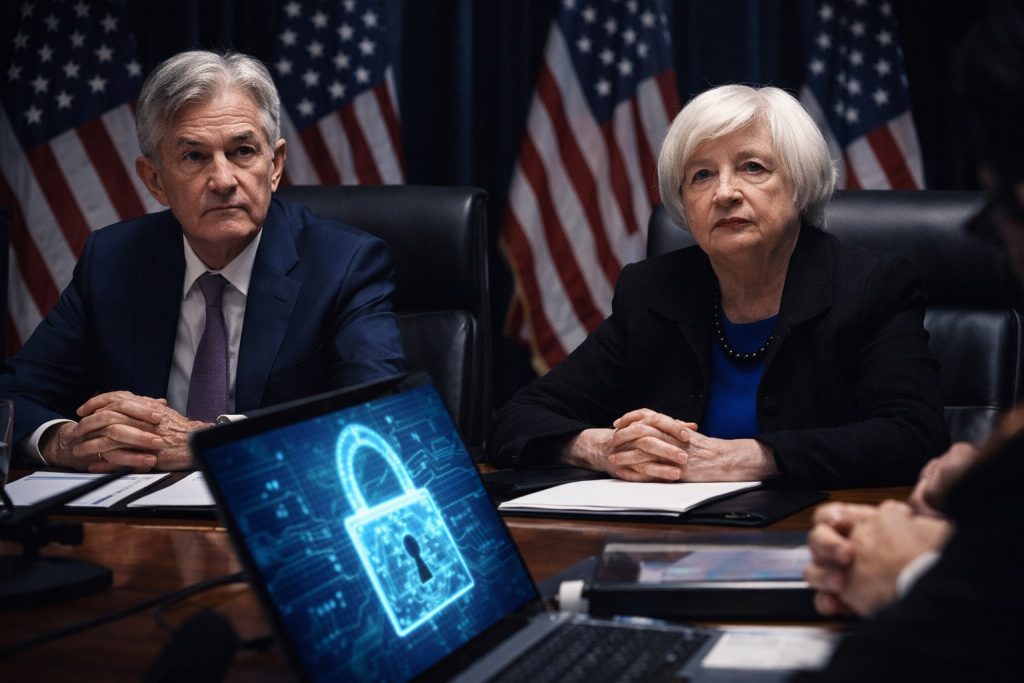
Top U.S. financial leaders convene to address rising cyber threats
Last Updated on April 12, 2026 by Admin
In an era where financial systems are increasingly digitized and globally interconnected, even the slightest hint of a cyber vulnerability can trigger swift action at the highest levels of government. That urgency was on full display as top U.S. financial leaders convened an emergency meeting to address what insiders describe as a growing and potentially destabilizing cyber risk.
The sudden gathering, involving Federal Reserve Chair Jerome Powell and Treasury Secretary Janet Yellen alongside other senior officials, has raised questions about the scale and immediacy of the threat. While details remain limited, the implications are significant—not just for the U.S. economy, but for global financial stability.
The U.S. Department of the Treasury plays a key role in safeguarding financial stability.
For more insights, explore our latest cryptocurrency news covering global financial developments.

A Rapid Response to an Emerging Threat
According to reports, the meeting was organized on short notice, signaling that officials perceived a pressing need to evaluate cybersecurity vulnerabilities within critical financial infrastructure. These systems include payment networks, banking platforms, and digital transaction frameworks that underpin trillions of dollars in daily activity.
Cybersecurity experts have long warned that financial institutions are prime targets for sophisticated attacks. From ransomware to state-sponsored intrusions, the risks have grown in both frequency and complexity. The urgency of this meeting suggests that officials may be responding to new intelligence or a heightened threat level.
Why Financial Systems Are Increasingly Vulnerable
Modern financial systems rely heavily on digital technologies, cloud computing, and interconnected networks. While these innovations have improved efficiency and accessibility, they have also expanded the attack surface for cybercriminals.
Key vulnerabilities include:
- Third-party service providers with weaker security protocols
- Legacy banking systems that struggle to integrate modern defenses
- Increasing reliance on real-time payment systems
- The rise of digital assets and decentralized finance platforms
These factors create a complex environment where a single breach could cascade across multiple institutions, amplifying the damage.
Stay informed with our blockchain and security updates for deeper analysis on digital risks.
The Role of Government Coordination
The involvement of both the Federal Reserve and the U.S. Treasury highlights the systemic nature of the concern. Cyber threats to financial systems are not isolated incidents—they have the potential to disrupt markets, erode trust, and trigger broader economic consequences.
Government agencies often coordinate through interagency groups to monitor risks and develop response strategies. These meetings typically involve:
- Intelligence sharing
- Risk assessment updates
- Contingency planning
- Coordination with private-sector stakeholders
The recent meeting appears to be part of this broader effort, but its urgency suggests a more immediate concern.
As the situation develops, staying informed through the latest cryptocurrency updates can help readers better understand how evolving cyber risks may impact digital assets and financial markets.
More details about financial system oversight can be found on the Federal Reserve official website.
Potential Triggers Behind the Meeting
While officials have not publicly disclosed the exact reason for the meeting, several possibilities are being considered:
1. New Intelligence on Cyber Threats
There may be credible intelligence indicating an imminent or ongoing cyber campaign targeting financial institutions.
2. Recent Cyber Incidents
A recent breach or attempted attack could have exposed vulnerabilities requiring immediate attention.
3. Geopolitical Tensions
Rising global tensions often correlate with increased cyber activity, particularly from state-sponsored actors.
4. Stress Testing Financial Infrastructure
Authorities may be conducting high-level reviews to ensure resilience against worst-case scenarios.
Implications for Markets and Consumers
Even without confirmed details, the mere fact that such a meeting took place can influence market sentiment. Investors tend to react cautiously to uncertainty, particularly when it يتعلق systemic risks.
For Financial Markets
- Increased volatility in banking and tech stocks
- Heightened scrutiny of cybersecurity practices
- Potential regulatory responses
For Consumers
- Greater emphasis on data protection
- Possible disruptions in digital banking services
- Increased awareness of cybersecurity risks
Strengthening Cyber Defenses
In recent years, regulators have pushed financial institutions to enhance their cybersecurity frameworks. This includes:
- Regular penetration testing
- Multi-factor authentication systems
- Real-time threat monitoring
- Incident response planning
However, the evolving nature of cyber threats means that defenses must constantly adapt. Collaboration between government and private sector entities is critical to staying ahead of attackers.
Institutions often follow cybersecurity risk guidelines issued by federal agencies.
For broader insights into market trends and emerging risks, follow our digital finance news coverage, where we regularly analyze global financial and cybersecurity developments.
The Bigger Picture: A Global Concern
Cybersecurity is not just a national issue—it is a global challenge. Financial systems are interconnected across borders, meaning that an attack in one region can have ripple effects worldwide.
International cooperation is therefore essential. Organizations such as central banks, regulatory bodies, and cybersecurity alliances play a key role in sharing information and coordinating responses.
Conclusion: Vigilance in a Digital Age
The emergency meeting involving top U.S. financial leaders underscores a simple reality: cybersecurity is now central to economic stability. While the specifics remain unclear, the urgency of the response highlights the seriousness of the threat.
As financial systems continue to evolve, so too must the strategies used to protect them. For policymakers, institutions, and consumers alike, vigilance is no longer optional—it is essential.