

Morgan Stanley Files Bitcoin and Solana ETF Applications
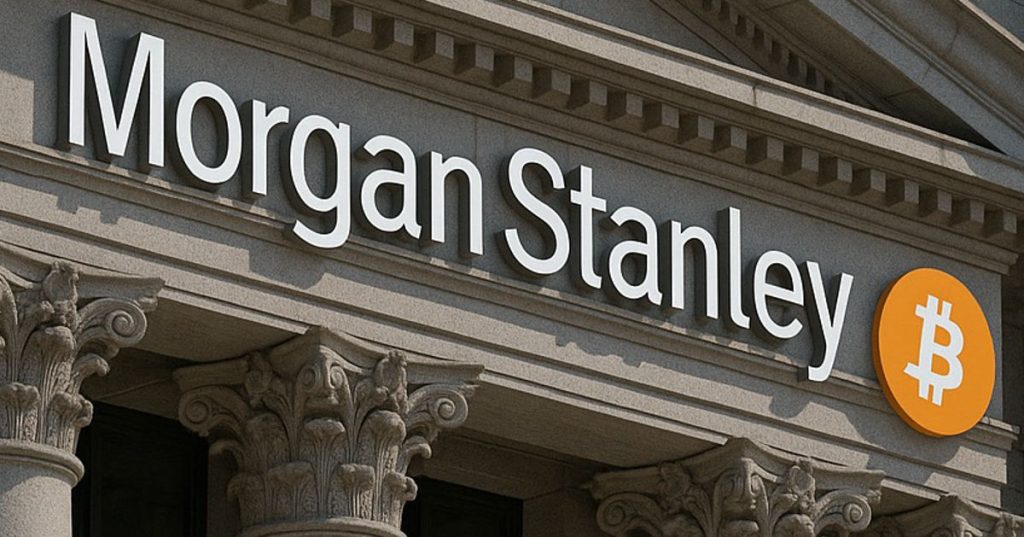
Morgan Stanley Files Bitcoin and Solana ETF Applications
Morgan Stanley has taken another significant step into the digital asset space by filing paperwork with U.S. regulators to launch exchange-traded funds linked to bitcoin and solana. The move signals the bank’s growing confidence in cryptocurrencies as an investable asset class and highlights the continued convergence of traditional finance and blockchain-based markets.
The filings, submitted to the U.S. Securities and Exchange Commission, outline plans for separate funds that would track the spot prices of bitcoin and solana. If approved, these products would allow investors to gain exposure to the two cryptocurrencies through familiar, regulated investment vehicles rather than directly owning the tokens.
This development places Morgan Stanley among a growing group of major financial institutions seeking to capitalize on rising demand for digital asset investment products. As regulatory frameworks evolve, large banks and asset managers are increasingly positioning themselves to meet investor interest while remaining within established compliance structures.
Expanding Institutional Access to Crypto
The proposed exchange-traded funds are designed to mirror the market value of bitcoin and solana, offering investors a way to participate in price movements without dealing with private keys, digital wallets, or cryptocurrency exchanges. This structure is particularly attractive to institutional and traditional investors who prefer regulated products traded on public markets.
Bitcoin, often viewed as the cornerstone of the cryptocurrency market, has already gained wider acceptance among institutional investors. Solana, while newer, has emerged as a prominent blockchain network due to its speed, scalability, and growing ecosystem of decentralized applications. By filing for both assets, Morgan Stanley is signaling confidence not only in established cryptocurrencies but also in next-generation blockchain platforms.

The bank’s decision reflects a broader industry shift in which digital assets are no longer seen as fringe investments. Instead, they are increasingly treated as part of a diversified portfolio strategy, particularly for investors seeking alternative assets with different risk and return profiles.
Morgan Stanley has previously offered crypto-related investment options to select high-net-worth clients, but the ETF filings suggest a more expansive approach. Exchange-traded funds have the potential to reach a wider audience, including retail investors who may be interested in crypto exposure but hesitant to navigate the technical aspects of direct ownership.
Regulatory Environment and Market Timing
The timing of the filings is notable, as the regulatory landscape surrounding digital assets in the United States continues to mature. While oversight remains strict, recent developments have provided clearer pathways for institutions seeking to launch crypto-linked investment products.
Regulators have emphasized the importance of investor protection, transparency, and proper custody arrangements. Morgan Stanley’s filings indicate an effort to align with these expectations, positioning the proposed funds within existing regulatory frameworks rather than pushing the boundaries of compliance.
Market conditions have also played a role in the bank’s move. Periods of increased interest in cryptocurrencies have coincided with growing acceptance by mainstream financial institutions. As digital assets become more integrated into global markets, firms that establish an early presence in regulated crypto products may gain a competitive advantage.
Competition in the ETF space is intensifying, with several asset managers racing to introduce products tied to various cryptocurrencies. Morgan Stanley’s entry adds further momentum to this trend and underscores how rapidly the market for crypto-linked investment vehicles is evolving.
Strategic Implications for Morgan Stanley
For Morgan Stanley, the ETF filings represent more than just new products. They are part of a broader digital asset strategy aimed at keeping the firm relevant in a financial landscape increasingly shaped by technological innovation.
By expanding into cryptocurrency ETFs, the bank is responding to client demand while also diversifying its asset management offerings. This approach allows Morgan Stanley to participate in the growth of digital assets without fully abandoning the traditional structures that underpin its business.
The move may also strengthen the firm’s position among younger investors, who tend to show greater interest in cryptocurrencies and blockchain technology. Providing access through familiar investment formats could help bridge generational gaps in investing preferences.
At the same time, the bank must navigate the risks associated with cryptocurrency markets, including price volatility and regulatory uncertainty. Launching regulated ETFs allows Morgan Stanley to manage some of these risks by operating within established financial systems.
Broader Impact on the Financial Industry
Morgan Stanley’s filings highlight how deeply digital assets are becoming embedded in mainstream finance. What was once viewed as an experimental or speculative market is now attracting sustained attention from some of the world’s largest financial institutions.
If approved, the bitcoin and solana ETFs could contribute to increased liquidity and broader participation in cryptocurrency markets. Greater institutional involvement may also lead to improved market stability over time, though volatility is likely to remain a defining feature of digital assets.
The move could encourage other banks and asset managers to accelerate their own crypto strategies, further integrating blockchain-based assets into conventional investment portfolios. This gradual normalization may reshape how investors think about diversification and long-term asset allocation.
While approval is not guaranteed and regulatory scrutiny remains high, Morgan Stanley’s action underscores a clear message: digital assets are becoming a permanent fixture in the global financial system.
As the review process unfolds, investors and industry observers will be watching closely to see whether these proposed ETFs move from filings to fully tradable products. Their success or failure could influence the direction of future crypto-related investment offerings across Wall Street.
In the larger context, Morgan Stanley’s initiative reflects a financial industry in transition—one that is increasingly willing to adapt traditional models to accommodate emerging technologies and new forms of value.