
Ethereum’s AI Integration Signals a New Era for Blockchain in 2026
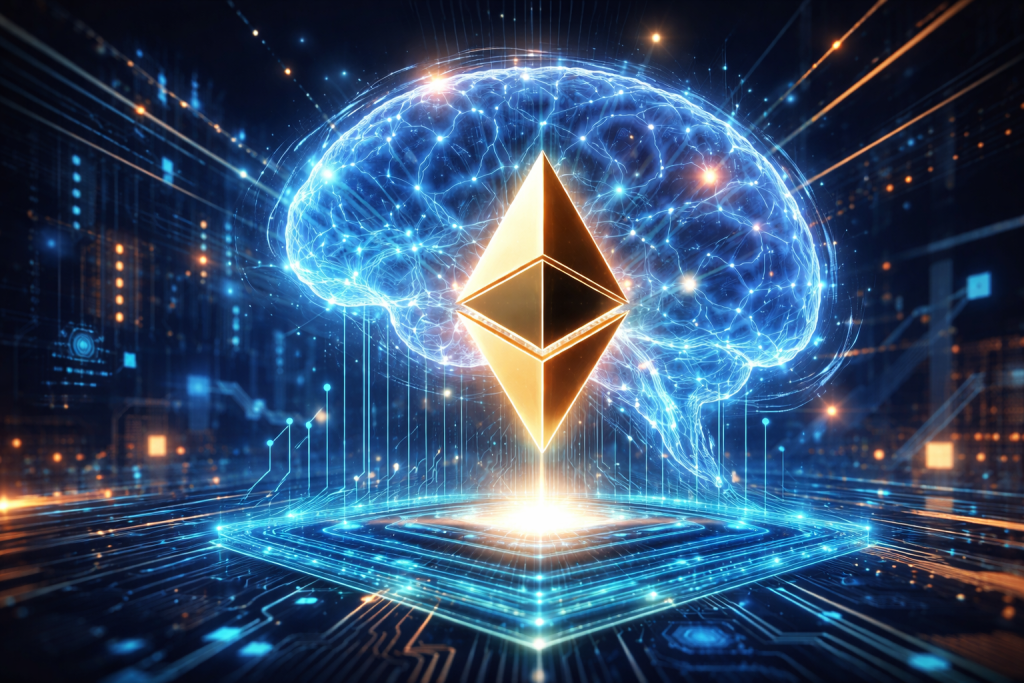
Ethereum integrates AI to power next-generation smart contracts in 2026
Last Updated on August 1, 2026 by Michael Motha
The global cryptocurrency landscape is witnessing a major shift in April 2026 as Ethereum moves beyond traditional decentralized finance (DeFi) and into the realm of artificial intelligence. This evolution is not just another upgrade—it represents a structural transformation in how blockchain networks operate, scale, and deliver value.
Stay updated with the latest crypto news updates as Ethereum continues to evolve rapidly in 2026.
With the rise of AI-powered smart contracts and rapid Layer 2 adoption, Ethereum is positioning itself at the center of the next-generation internet, often referred to as Web3. Analysts and developers alike are calling this convergence one of the most important developments in crypto this year.
According to the Ethereum official documentation, ongoing upgrades aim to enhance scalability and efficiency.
AI-Powered Smart Contracts: From Automation to Autonomy
A growing number of organisations are already exploring AI-assisted smart contract development and security testing. The Ethereum Foundation has highlighted ongoing research into improving smart contract reliability, while blockchain developers are increasingly using AI-powered tools to identify vulnerabilities before deployment. These developments demonstrate how AI is becoming a practical complement to human expertise rather than a replacement.
Smart contracts have long been the backbone of Ethereum. However, the latest innovation introduces AI-driven decision-making into these contracts, allowing them to adapt dynamically based on real-world data inputs.
Unlike traditional contracts that execute predefined rules, AI-enhanced smart contracts can:
- Analyze market conditions in real time
- Adjust parameters automatically
- Optimize outcomes without human intervention
This shift is especially impactful in sectors like decentralized finance, supply chain management, and gaming ecosystems.
Developers are increasingly exploring AI integrations through Ethereum-compatible frameworks, accelerating adoption across industries.
These advancements are reshaping decentralized finance innovations across the Ethereum ecosystem.
Layer 2 Scaling Drives Massive Growth
Another major factor behind Ethereum’s 2026 momentum is the rapid expansion of Layer 2 solutions. These technologies significantly reduce transaction costs and improve scalability, making Ethereum more accessible for mainstream use.
Popular Layer 2 ecosystems are now handling a large portion of Ethereum’s transaction volume, reducing network congestion while maintaining security through the main chain.
This surge is also driving:
- Increased user adoption
- Higher transaction throughput
- Improved developer activity
As a result, Ethereum is becoming more efficient and competitive against emerging blockchain platforms.
Layer 2 networks now handle a significant portion of Ethereum transactions, improving scalability and reducing costs.
Recent Ethereum market trends indicate a surge in Layer 2 adoption across global users.
Institutional Interest Reaches New Highs
Institutional investors are paying close attention to Ethereum’s AI transformation. The combination of blockchain transparency and AI intelligence creates new opportunities for automated financial systems and predictive analytics.
Major investment firms are now exploring:
- AI-powered DeFi strategies
- Tokenized AI assets
- Blockchain-based data marketplaces
This institutional push is further strengthening Ethereum’s market position and long-term credibility.
Recent crypto industry reports highlight increasing institutional interest in AI-powered blockchain systems.
Key Insight
AI is accelerating smart contract development and improving vulnerability detection. However, experienced security auditors and developers remain essential to ensure blockchain applications are secure before deployment in production environments.
Security and Challenges in AI Integration
While the benefits are significant, integrating AI into blockchain systems also introduces new challenges.
Key concerns include:
- Data reliability for AI models
- Potential vulnerabilities in autonomous contracts
- Ethical implications of AI decision-making
Developers are actively working on solutions, including decentralized AI verification systems and enhanced auditing frameworks.
Despite these concerns, the overall trajectory remains strongly positive, with innovation outpacing risks.
Ethereum’s Role in the Future of Web3
Ethereum’s evolution is shaping the future of Web3 by combining decentralization with intelligence. This hybrid model enables applications that are not only trustless but also adaptive and efficient.
Potential use cases include:
- Autonomous financial platforms
- AI-driven decentralized applications (dApps)
- Intelligent NFT ecosystems
This convergence is expected to redefine how users interact with digital systems, moving from static platforms to dynamic, self-improving networks.
Market Impact and Price Outlook
The growing adoption of AI within Ethereum’s ecosystem is already influencing market sentiment. Traders and analysts are increasingly viewing Ethereum as more than just a cryptocurrency—it is becoming a foundational layer for intelligent digital infrastructure.
Key market indicators show:
- Rising developer activity
- Increased on-chain transactions
- Growing institutional participation
While short-term volatility remains a factor, the long-term outlook appears bullish as innovation continues to drive demand.
Ethereum price data reflects growing investor confidence in AI-driven developments.
As enterprises continue investing in AI-driven blockchain solutions, the collaboration between artificial intelligence and smart contracts is expected to accelerate across financial services, supply chain management and digital identity platforms. Industry observers believe this convergence could become one of blockchain’s most significant developments over the coming years.
Conclusion
Looking ahead, Ethereum’s integration of artificial intelligence marks a pivotal moment in the evolution of blockchain infrastructure, distributed ledger technology, and decentralised infrastructure. By combining automation with intelligence, Ethereum is unlocking new possibilities that extend far beyond traditional crypto use cases.
As Layer 2 scaling accelerates and institutional interest grows, Ethereum is well-positioned to lead the next phase of digital transformation in 2026.
For investors, developers, and tech enthusiasts, this trend is not just worth watching—it may define the future of the decentralized internet.

Michael Motha is the Founder and Managing Director of CryptoNewsOnlineHub and works as a freelance Project Head. A crypto enthusiast and researcher, he focuses on blockchain trends, digital assets, and emerging crypto technologies. With an educational background in Physics, an MBA, and a B.Ed from Loyola College, Chennai, he aims to make complex crypto topics clear and accessible through insightful content.