NFTs Are Evolving Beyond Digital Art as Brands Build Real-World Communities
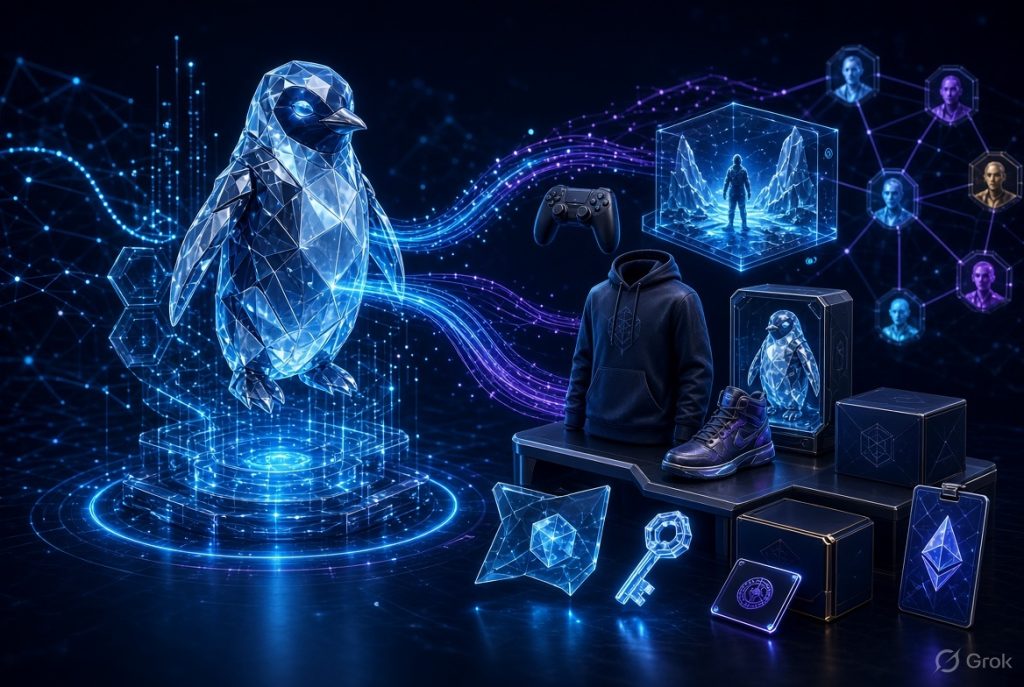
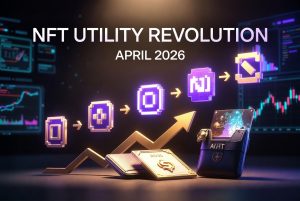
NFTs are evolving beyond digital art as brands explore real-world utility and digital communities.
Last Updated on September 22, 2026 by Michael Motha
NFTs are entering a different stage of their development.
The market was once dominated by conversations about digital art, rarity and speculative trading. Today, some of the most interesting NFT projects are attempting something broader: turning digital ownership into communities, consumer brands, physical products, games, entertainment and interactive experiences.
That transition does not mean digital art has disappeared.
Instead, the role of NFTs is becoming more diverse.
Recent developments illustrate the change. OpenSea has expanded its marketplace to support Solana NFTs alongside assets from more than 25 blockchains, giving creators and collectors a broader multi-chain marketplace environment.
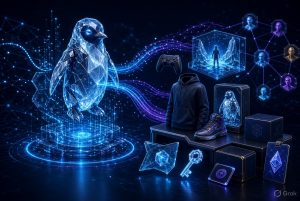
At the same time, brands such as Pudgy Penguins are pushing NFT-linked intellectual property into physical retail, collectibles, entertainment and new technology products. The project says its characters are now being developed across toys, trading cards, comics, games and other consumer experiences.
The bigger question is therefore no longer simply whether people will buy NFT artwork.
It is whether NFTs can become useful digital ownership and community layers for much larger consumer ecosystems.
The NFT Market Is Moving Beyond the Picture
The first major wave of NFTs introduced millions of people to the idea that a blockchain could represent ownership of a unique digital item.
That concept was simple but powerful.
A digital image could be linked to a blockchain token. The token could be transferred between wallets. Its ownership history could be publicly verified.
For creators, this offered a new way to distribute digital work.
For collectors, it introduced scarcity to an environment where digital files could otherwise be copied almost endlessly.
However, the limitations of a purely collectible model also became clear.
If the only reason to own an NFT is the expectation that someone else will pay more for it later, demand can disappear quickly.
That is pushing the industry toward a different proposition.
NFT projects increasingly need to offer something beyond scarcity.
That might be access to a community, a physical product, an entertainment universe, a game, a membership experience or a recognizable brand.
This is where the idea of NFT-powered brands and experiences becomes increasingly important.
Utility Could Become More Important Than Rarity
Rarity remains relevant to collectible markets.
Collectors naturally value items that are scarce, distinctive or historically significant.
But rarity alone does not necessarily create long-term demand.
A project can have extremely rare tokens and still struggle to maintain an active community.
Utility changes the equation.
An NFT can become an access pass.
It can unlock digital content.
It can provide membership benefits.
It can connect a physical item to a blockchain record.
It can represent a character within a game or entertainment universe.
It can even become part of a wider licensing strategy.
The result is a broader definition of what an NFT can represent.
Rather than asking only, “How rare is this token?”, consumers may increasingly ask, “What does owning this token allow me to do?”
That is a much more sustainable question for the long-term development of the sector.
Pudgy Penguins Shows How NFT Brands Can Enter the Physical World
Pudgy Penguins provides one of the clearest examples of this changing model.
The project has moved well beyond its original NFT collection, developing a broader consumer brand involving physical merchandise, trading cards, comics, events and other experiences.
Its own media updates describe expansion into retail, collectibles and community activities, including placement of Pengu products in Target stores across the United States.
This creates an important distinction between an NFT collection and an NFT-powered brand.
The NFT becomes part of the identity system.
The character can exist on a blockchain, appear on a physical product, feature in entertainment and participate in community experiences.
That gives the underlying intellectual property multiple routes to reach consumers.
It also means someone can encounter the brand without necessarily owning an NFT first.
That may be one of the most important developments in the sector.
Mainstream adoption does not necessarily require consumers to begin with wallets and marketplaces.
They may first encounter an NFT-based brand through a toy, game, comic, social platform or retail product.
Blockchain ownership can come later.
Physical Products Could Create a New Entry Point
The connection between NFTs and physical products is particularly interesting because it removes one of the biggest barriers to mainstream adoption.
Traditional consumers understand physical collectibles.
They understand trading cards, toys, limited editions and branded merchandise.
They may not understand blockchain wallets or token standards.
An NFT-linked physical product can therefore introduce blockchain concepts indirectly.
A consumer might purchase a collectible because they like the character.
Later, they may discover that the digital version provides additional benefits.
This reverses the traditional Web3 onboarding model.
Instead of asking consumers to enter the blockchain world first, brands can bring blockchain functionality into experiences that already feel familiar.
That could make NFT technology more accessible.
The wider movement toward [real-world asset tokenization] also shows how blockchain ownership is increasingly being connected with assets and experiences outside purely digital markets.
AI-Powered Products Could Expand NFT Utility Further
The next stage could involve NFTs becoming connected to interactive products.
A recent collaboration involving Pudgy Penguins illustrates this possibility.
Mint and its subsidiary Rice AI announced a licensing agreement with Pudgy Penguins to develop a limited-edition AI-powered companion robot featuring the Blue Pengu character. The product is intended to combine the Pudgy Penguins brand with consumer robotics.
The development is interesting because it changes the relationship between digital ownership and physical technology.
An NFT character does not have to remain inside a marketplace.
It can become an identity that appears in toys, games, robotics, entertainment and other products.
That opens a much wider range of possibilities.
Imagine a digital character that can move between a game, a physical collectible, an interactive robot and an online community.
The blockchain component could provide continuity between those environments.
The technology does not need to dominate the user experience.
In fact, it may become more useful when consumers barely notice it.
Multi-Chain Access Could Reduce NFT Fragmentation
Another challenge facing NFTs has been fragmentation.
Different collections have historically existed across different blockchain networks and marketplaces.
That can make discovery difficult.
A collector interested in Ethereum NFTs may not automatically explore Solana collections. Someone using one marketplace may have little reason to visit another.
Marketplace aggregation can reduce some of that friction.
OpenSea announced full support for Solana NFTs, allowing users to discover, buy and sell Solana-based NFTs alongside collections from other supported blockchains. The company said Solana became its first non-EVM blockchain with complete buying, selling and bidding functionality.
This matters for creators as well as collectors.
A creator’s potential audience becomes larger when collectors do not need to understand the technical differences between blockchain networks before discovering a collection.
The long-term NFT marketplace may therefore become less about individual chains and more about seamless access.
Marketplaces Are Becoming Discovery Platforms
The future NFT marketplace may look increasingly different from the marketplaces of the earliest NFT boom.
Instead of functioning simply as places where tokens are bought and sold, marketplaces can become discovery platforms for digital culture.
Collectors might browse art, gaming items, memberships, physical collectibles and branded experiences in the same environment.
That creates an opportunity for marketplaces to become the equivalent of digital department stores for blockchain-based ownership.
The challenge is maintaining quality.
As the number of collections increases, discovery becomes more difficult.
Marketplaces need better filtering, provenance information, creator verification and security tools.
They also need to reduce scams and misleading collections.
The usefulness of a marketplace therefore depends not simply on how many NFTs it lists, but on how effectively it helps users understand what they are buying.
Gaming Could Give NFTs a More Practical Role
Gaming remains one of the areas where NFTs could potentially demonstrate utility at scale.
A game item has an obvious purpose.
A character, weapon, vehicle, land parcel or collectible can have a function inside a digital environment.
The blockchain can provide ownership records that exist outside the game’s internal database.
That does not automatically make blockchain gaming successful.
Games still need to be enjoyable.
Players generally will not continue using a game simply because its assets are NFTs.
The underlying experience has to come first.
However, if blockchain ownership becomes invisible to the player while providing useful benefits, NFTs could become a natural part of gaming infrastructure.
The most successful blockchain games may therefore be the ones that do not constantly remind players that they are using blockchain technology.
NFTs Could Become Digital Memberships
Another long-term possibility is the use of NFTs as memberships.
A token can represent access to a community, event, service or digital environment.
Unlike a traditional login credential, blockchain-based membership can potentially be transferred, verified and integrated with other applications.
That creates opportunities for brands and communities.
An NFT membership could provide access to exclusive events while also functioning as a collectible.
It could unlock digital content while maintaining a visible ownership history.
It could even connect online communities with physical experiences.
The important point is that the NFT does not have to be the product itself.
It can be the infrastructure behind the membership relationship.
Brands Could Use NFTs Without Calling Them NFTs
Mainstream adoption may eventually produce an interesting paradox.
The technology could become more successful while the term “NFT” becomes less prominent.
Consumers may interact with blockchain-based digital collectibles without thinking about the technical structure behind them.
A customer could buy a limited-edition product and receive a digital collectible.
A gamer could own an item that can be verified on-chain.
A concert attendee could receive a blockchain-based ticket or commemorative collectible.
A community member could hold a digital membership.
None of these experiences necessarily requires the consumer to understand blockchain technology.
That could be a sign of maturity rather than decline.
Technology becomes infrastructure when users can benefit from it without needing to understand its underlying mechanics.
Digital and Physical Collectibles Could Converge
NFTs also have an opportunity to connect two traditionally separate collectible markets.
Physical collectibles have existed for generations.
Digital collectibles are comparatively new.
Blockchain technology can create a bridge between them.
A physical trading card could be linked to a digital token.
A limited-edition toy could have a corresponding blockchain record.
A signed collectible could receive a digital certificate of authenticity.
A digital character could become the foundation for a physical merchandise line.
These connections can create new forms of ownership.
They also give brands additional ways to build relationships with collectors.
Pudgy Penguins’ expansion across physical products, trading cards, comics and other experiences demonstrates how an NFT-originated intellectual property can operate across multiple formats.
The same connection between digital ownership and traditional finance can be seen in the growing development of [tokenized financial assets], although NFTs and securities serve very different purposes.
The Business Model Matters More Than the Hype
NFT projects still need sustainable economics.
A collection cannot depend forever on new buyers entering the market.
Successful projects need ways to generate revenue through products, licensing, games, memberships, events or other services.
This is where the shift toward intellectual property becomes important.
An NFT collection can become a brand.
A brand can generate licensing revenue.
Licensed characters can appear in products.
Products can introduce the brand to new audiences.
Those audiences can then become part of the wider community.
The NFT becomes one component of a larger business model.
That structure may prove more durable than a market based primarily on secondary trading.
This broader shift mirrors the development of [crypto market infrastructure], where long-term adoption increasingly depends on useful systems rather than short-lived market narratives.
Security Remains a Major Concern
Greater utility also creates greater responsibility.
If NFTs become connected to games, physical products, memberships and valuable communities, security becomes increasingly important.
Wallet theft remains a risk.
Smart-contract vulnerabilities can cause losses.
Fake collections can imitate legitimate brands.
Marketplace accounts can be compromised.
Users may also misunderstand the difference between owning an NFT and owning the underlying intellectual property.
These issues cannot be solved simply by adding more blockchain functionality.
Projects need clear ownership terms, secure infrastructure, transparent contracts and effective user education.
The more valuable the ecosystem becomes, the more important these protections will be.
What Happens to NFT Speculation?
Speculation is unlikely to disappear.
Collectibles have always attracted investors, traders and speculators.
NFTs are no different.
Some collectors will continue to buy tokens because they believe prices could rise.
That activity can provide liquidity to the market.
But speculation alone may not be enough to sustain an entire industry.
Utility provides another foundation.
A person who buys an NFT because it gives access to a community or product may value it differently from a trader who buys purely because the floor price is rising.
That distinction could help create a healthier market structure.
The two groups can coexist.
The challenge is ensuring that projects are not dependent entirely on speculative demand.
The Next NFT Market Could Be More Diverse
The future NFT ecosystem is unlikely to revolve around one dominant use case.
Digital art will remain important.
Gaming can create another major category.
Physical collectibles can connect blockchain ownership with traditional collecting.
Membership NFTs can support communities.
Brands can use digital assets for loyalty and engagement.
Entertainment companies can use blockchain-based ownership around characters and franchises.
Marketplaces can bring these categories together.
That diversity could make the NFT sector less dependent on any single trend.
It also changes how success should be measured.
Trading volume remains useful, but it does not tell the entire story.
Community activity, product sales, licensing, retention, utility and real-world adoption can also matter.
This broader movement is also connected to the expanding role of [stablecoins in digital finance], particularly as blockchain-based ecosystems develop new ways to move value.
Industry Outlook
NFTs are gradually moving from a narrow digital-collectibles concept toward a broader ownership and engagement technology.
The strongest projects may not necessarily be those with the highest short-term trading activity.
They could be the ones that build recognizable intellectual property, active communities and useful experiences around their digital assets.
Multi-chain marketplace support may also reduce technical barriers for collectors and creators.
OpenSea’s expansion into Solana NFTs is one example of how marketplaces are attempting to bring different blockchain communities into a more unified environment.
Meanwhile, the growth of physical products and licensed experiences shows that NFT-originated brands can operate outside blockchain marketplaces.
The sector still faces major challenges, particularly around speculation, security, intellectual-property rights and sustainable economics.
Even so, the underlying idea of verifiable digital ownership remains relevant.
CryptoNewsOnlineHub Perspective
The most important NFT development may not be the next collection to generate a large trading volume.
It may be the gradual disappearance of the boundary between digital collectibles and mainstream consumer products.
NFTs can represent characters.
Characters can become brands.
Brands can create toys, games, entertainment and communities.
Those experiences can introduce blockchain ownership to people who may never have considered themselves crypto users.
That creates a different path to adoption.
Instead of asking consumers to buy an NFT because it is an NFT, projects can give people a reason to want the underlying experience.
The blockchain then becomes part of the infrastructure supporting ownership, identity and community.
That is a much larger opportunity than digital art alone.
The NFT market is therefore entering an important test.
Can projects turn blockchain-based ownership into products and experiences that people genuinely value?
If they can, NFTs may become less associated with short-term speculation and more closely connected with digital culture, consumer brands and interactive communities.
The technology may not disappear.
Instead, it may simply become less visible.
Frequently Asked Questions
NFT utility refers to the practical benefits associated with owning an NFT, such as access to communities, games, products, events, digital content or other experiences.
Digital art remains an important NFT category, but the technology is increasingly being used for gaming, memberships, physical collectibles, brand licensing and other applications.
Yes. NFT projects can connect digital tokens with physical merchandise, collectibles, certificates, memberships and other real-world experiences.
Multi-chain support can make it easier for collectors to discover and trade NFTs from different blockchain networks without using separate marketplaces for every ecosystem.
They could, particularly when consumers encounter NFT-originated intellectual property through familiar products such as toys, games, entertainment and retail merchandise.
No. NFTs can involve price volatility, scams, smart-contract vulnerabilities, wallet-security risks, liquidity problems and uncertainty around intellectual-property rights.
Conclusion
The NFT industry is changing.
The early market proved that blockchain could establish verifiable scarcity for digital assets.
The next phase is testing whether that ownership model can support something much larger.
Digital collectibles can become characters.
Characters can become brands.
Brands can expand into physical products, games, entertainment, memberships and communities.
At the same time, multi-chain marketplaces can make these ecosystems easier to discover and access.
The result could be an NFT market that looks very different from the speculative collectible market that first captured global attention.
The most valuable NFT may not simply be the rarest image.
It could be the digital asset that connects a person to a community, product, game or brand they genuinely want to be part of.
That is where NFT utility could ultimately prove its greatest value.

Michael Motha is the Founder and Managing Director of CryptoNewsOnlineHub and works as a freelance Project Head. A crypto enthusiast and researcher, he focuses on blockchain trends, digital assets, and emerging crypto technologies. With an educational background in Physics, an MBA, and a B.Ed from Loyola College, Chennai, he aims to make complex crypto topics clear and accessible through insightful content.